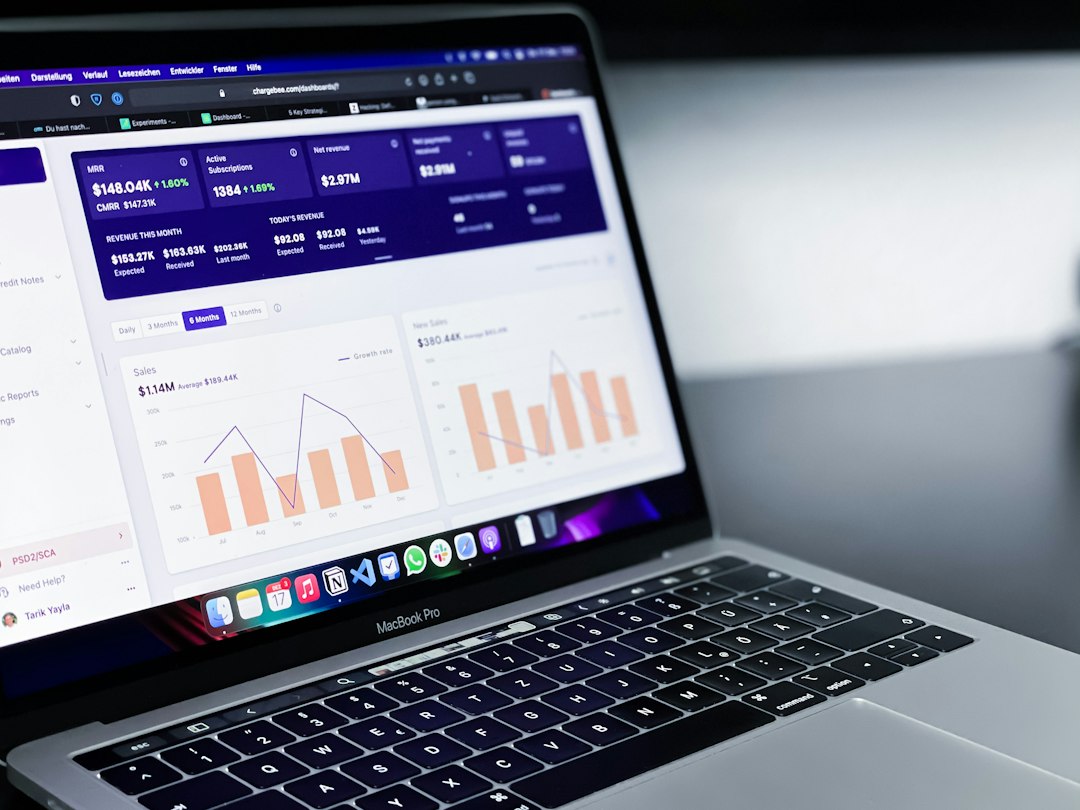
 Photo by path digital on Unsplash
Introduction: Why Lead Qualification Chatbots Matter for Agency Clients
The sales development rep who manually qualifies every inbound lead is becoming a luxury most companies can't justify. In 2026, the businesses hiring agencies for chatbot work aren't asking "can this replace a human?" They're asking "how fast does this pay for itself?" That shift in framing changes everything about how you sell, deploy, and report on lead qualification chatbots.
A few years ago, chatbots were a nice-to-have, something agencies pitched as a modern touch for a client's website. Now they're being evaluated the same way a company evaluates a new hire or a new piece of sales software: against a budget line, against a quota, against a clear expectation of return. That's good news for agencies that know how to run the numbers, and bad news for agencies that are still pitching chatbots on vibes.
Here's the practical reality. Clients don't buy chatbots. They buy pipeline. They buy fewer wasted hours on tire-kickers. They buy a sales team that only talks to people worth talking to. When you walk into a sales conversation this week armed with a real ROI calculation and pipeline impact for clients, you're not selling a gadget, you're selling a business case. That's a conversation that closes.
This matters for retention too. A client who signed on because your demo looked slick will churn the first time they get a bad quarter. A client who signed on because you showed them exactly how lead qualification chatbots: ROI calculation and pipeline impact for clients work together, with numbers they understand and can defend to their own boss, sticks around because they can see the math working in their CRM every month.
This article walks through how to calculate that ROI credibly, how to explain pipeline impact without overselling, and how to package all of it as a service offering that justifies real pricing. If you're reselling or building chatbots for clients, this is the framework to bring to your next pitch.
Understanding Lead Qualification Chatbot ROI: The Core Metrics
Before you can prove ROI, you need to agree with your client on what "return" actually means. Too many agencies throw around vague terms like "better leads" or "more efficiency" without ever defining a number the client can track. Here's what actually matters.
Conversion rate from lead to qualified opportunity. This is the percentage of total inbound leads that turn into something the sales team is willing to spend time on. A chatbot that asks the right screening questions (budget, timeline, decision-making authority, specific need) filters out the leads that were never going anywhere. If a client currently converts 15% of raw leads into qualified opportunities, and the chatbot gets that to 28%, you have a number worth putting on an invoice.
Cost per qualified lead. Not cost per lead, cost per qualified lead. This is where most agencies undersell themselves. A client spending $40 per lead on ads but only converting 1 in 10 to a real opportunity is paying $400 per qualified lead. If the chatbot improves that qualification rate even modestly, the cost per qualified lead drops fast, and that's a number that finance teams actually care about.
Time to qualification. How long does it take, on average, from first contact to a lead being marked qualified or disqualified? Manual processes often take days because a rep has to notice the lead, review it, and follow up. A chatbot does this in the first conversation, often within minutes. That speed matters more than most clients initially realize, because speed-to-lead is one of the strongest predictors of close rate in both B2B and B2C sales.
Hours recovered per month. This is the easiest number to calculate and often the most persuasive one in a pitch. Take the average time a sales rep spends on initial lead screening (calls, emails, back-and-forth to figure out if someone is worth pursuing) and multiply it by the number of leads per month. If a rep spends 15 minutes per lead on initial qualification and the client gets 200 leads a month, that's 50 hours of rep time recovered if the chatbot handles first-pass screening. At a loaded cost of $35/hour for a sales rep, that's $1,750 a month in recovered labor, not counting the opportunity cost of what else that rep could be selling.
Cost comparison: chatbot vs. additional headcount. This is the comparison that closes deals with budget-conscious clients. Hiring an entry-level SDR costs most companies $45,000 to $60,000 a year in salary alone, before benefits, training time, management overhead, and turnover risk. A lead qualification chatbot, even a fully custom one with ongoing training and support, typically costs a fraction of that annually. You're not asking the client to choose between a chatbot and nothing. You're asking them to choose between a chatbot and a $50,000 hire that might quit in eight months.
Real data from 2026 deployments backs this up. Agencies running lead qualification bots across e-commerce, home services, SaaS, and B2B consulting clients report average qualification rate improvements in the 25-60% range, mostly because the bot never skips a screening question, never has a bad day, and works 24/7 instead of during business hours only. The industries seeing the biggest lift are the ones with high lead volume and low average deal value (home services, insurance, real estate) because those are the businesses most likely to have under-qualified their leads in the first place due to rep bandwidth.
Direct Revenue Impact: How Chatbots Improve Pipeline Quality
ROI calculations matter, but clients ultimately care about one thing: does this make the business more money. Lead qualification chatbots affect revenue in three specific ways, and understanding each one helps you explain pipeline impact in language that resonates with a client's sales leadership, not just their marketing team.
Higher-quality leads through intelligent screening. A chatbot asking structured qualification questions (what's your budget range, what's your timeline, are you the decision maker, what problem are you trying to solve) does something most inbound forms never do: it filters in real time. Instead of a sales rep calling through a list of 100 leads to find the 20 worth pursuing, the rep gets handed the 20 directly, pre-qualified, with context already gathered. This isn't about generating more leads. It's about making sure the leads that reach a human are worth a human's time.
Reduced time-to-qualification and faster sales cycles. When qualification happens instantly instead of over days of phone tag, the entire sales cycle compresses. A lead who talks to a chatbot at 11pm on a Tuesday gets qualified and routed before the sales team even opens their laptop the next morning. That lead is now warm and ready for a conversation instead of cold and forgotten. Faster qualification consistently correlates with shorter overall sales cycles because momentum doesn't get lost.
Improved lead-to-customer conversion rates. This is the metric that ties everything together. When sales reps spend their time only on qualified opportunities, their close rate on those opportunities tends to rise, because they're not splitting attention across a pile of unqualified noise. Clients see this show up as a straightforward percentage increase in their CRM: more deals closed from the same total lead volume, or the same number of deals closed with meaningfully less rep time invested.
A home services client running a lead qualification bot during a slow season example: raw inbound leads stayed flat month over month, but qualified opportunities increased by 34% because the bot was catching after-hours inquiries that previously sat unanswered until the next business day, by which point many prospects had already called a competitor. That's not a hypothetical. That's the kind of pipeline velocity improvement that justifies a monthly retainer increase.
A B2B SaaS client saw their average time-to-first-qualified-call drop from 3.2 days to under 4 hours after deploying a qualification bot on their demo request form. Sales leadership credited that speed with a measurable uptick in demo show rates, because prospects were still in a buying mindset when the callback happened instead of having moved on to evaluate someone else.
These are the stories you want in your back pocket when a prospect says "show me this actually works." Numbers plus a narrative beat numbers alone every time.
Calculating True ROI: A Step-by-Step Framework for Your Clients
Here's where you turn all of the above into something you can literally open on a laptop during a sales call and walk a client through, line by line.
Step 1: Break down implementation costs. Be honest about every cost component, because a client who later discovers a hidden fee will question your entire relationship. List out: initial setup and configuration, conversation flow design and training, integration with the client's CRM or helpdesk, ongoing monthly maintenance and optimization, and any white-label platform fees you're passing through. If you need a refresher on how integration costs factor into pricing, our guide on chatbot integration with existing client software breaks down what's realistic to charge for CRM, helpdesk, and payment tool connections.
Step 2: Quantify labor cost reduction. Use the client's actual numbers, not industry averages, whenever possible. Ask how many leads come in monthly, how much time reps currently spend on initial qualification, and what the fully loaded hourly cost of that rep time is. Multiply hours saved by hourly cost. This is your baseline monthly savings figure.
Step 3: Measure lead quality improvements and assign monetary value. This is the step most agencies skip because it's harder to pin down, but it's where the real ROI often lives. If the client's average deal value is $3,000 and their current lead-to-close rate is 8%, every 100 leads produces 8 closed deals worth $24,000. If improved qualification lifts that close rate to 11% on the same lead volume, that's 11 closed deals, or $33,000. The $9,000 difference is directly attributable to better qualification, not more leads, and that distinction matters because it proves the chatbot's value independent of ad spend or marketing performance.
Step 4: Build a 6, 12, and 24-month projection. Clients think in budget cycles, so give them a timeline that matches how they plan. A simple three-column model works:
- 6 months: Setup costs are mostly absorbed here. Show modest but real labor savings and early qualification rate improvements as the bot's training data improves.
- 12 months: Full run-rate savings kick in. This is typically where cumulative ROI crosses into clearly positive territory, often somewhere between 3x and 8x the total cost depending on lead volume and deal size.
- 24 months: Compound the labor savings and revenue lift, and factor in reduced need for additional headcount even as the client's lead volume grows. This is the column that makes a retainer renewal an easy yes.
Step 5: Use a shared spreadsheet, not a static PDF. Build (or use) a simple ROI calculator spreadsheet with input cells for the client's actual lead volume, average deal value, current conversion rate, and rep hourly cost. Let them adjust the numbers in the meeting. When a client plugs in their own data and watches the ROI projection update in real time, they trust the output far more than if you hand them a glossy one-pager with numbers they can't verify. This single tactic, letting the client touch the model, closes more deals than any slide deck.
Keep this spreadsheet as a reusable asset across your client base. Every new prospect becomes a five-minute conversation instead of a from-scratch pitch deck build.
Overcoming Client Objections: ROI Concerns and Skepticism
Even with solid numbers, clients push back. Here's how to handle the objections that come up most often.
"But we already have a CRM." A CRM stores and organizes leads. It doesn't qualify them. Explain the difference clearly: the CRM is the filing cabinet, the chatbot is the person deciding what goes in which folder before it ever hits a rep's desk. Most CRMs can also be integrated directly with the chatbot, so lead data flows automatically instead of requiring manual entry, which is itself part of the time savings pitch.
Proving ROI when lead volume is small or variable. Not every client has 500 leads a month. For lower-volume clients, shift the ROI story from "hours saved" to "opportunity cost of missed leads." A client getting 15 high-value leads a month can't afford to lose even one to slow response time. Frame the chatbot's value around speed and after-hours coverage rather than bulk time savings, since a single additional closed deal often covers the entire annual cost for a low-volume, high-ticket client.
AI accuracy and qualification errors. Be upfront that no qualification system, human or AI, is perfect. Set a realistic benchmark during onboarding (for example, a target qualification accuracy rate validated against a sample of leads reviewed by the sales team in the first 30 days) and agree on how errors get corrected. This is also where setting clear metrics in the contract protects both sides. Our piece on chatbot performance benchmarks and contract metrics is worth reviewing before you finalize any ROI promises in writing.
Managing expectations during ramp-up. The first 30 to 60 days are rarely the bot's best performance window, because it's still being trained on real conversation patterns. Tell clients this upfront. Set the 6-month projection as the first real proof point, not week one. Clients who are warned about a ramp-up period rarely panic during it. Clients who weren't warned assume the whole project is failing.
Positioning Lead Qualification Chatbots as White-Label Solutions for Agencies
Once you can calculate and defend ROI, the next question is how to package and price the offering so it's sustainable for your agency, not just a one-off project.
Branded deployment. Clients want to see your agency's name on the dashboard and reporting, not a third-party platform logo they've never heard of. A white-label setup lets you present the entire ROI calculation and pipeline impact for clients as your proprietary process, which reinforces the value of your retainer instead of making the underlying platform the star of the pitch. If you haven't compared white-label platforms recently, it's worth checking chatforger.com/features to see what's included before quoting a client.
Packaging ROI calculations as a service line. Don't give away the ROI spreadsheet for free as part of a sales pitch and then never mention it again. Build quarterly ROI reporting into your retainer. Clients renew when they can see the math updating in their favor every quarter, and this reporting cadence becomes a natural upsell moment for expanding the bot's scope or adding new qualification flows.
Setting price expectations based on outcomes, not features. Instead of pricing a lead qualification chatbot as "a $500/month chatbot," price it as "a system that saves you $1,750 a month in rep time and adds an estimated $9,000 in monthly pipeline value for $500 a month." That framing changes the entire negotiation. For more on structuring these conversations and who absorbs training costs upfront, see our guide on chatbot training costs and who pays.
Tiered service models. Not every client needs the same depth. A basic tier might cover simple qualifying questions and lead routing. A mid tier adds CRM integration and automated follow-up sequences. A top tier includes advanced AI-driven scoring, multi-language support, and ongoing optimization based on closed-deal data. Tiering lets you serve a $300/month client and a $3,000/month client with the same core product, which protects your margins across a varied client base. This also pairs well with broader bundling and packaging strategies if you're already offering other services like ad management or CRM setup.
If you're still deciding whether to build this in-house or resell an existing platform, start by reviewing chatforger.com/pricing to understand what margin you're working with before you build these numbers into a client proposal.
FAQ
How quickly can agencies expect to see ROI from lead qualification chatbots? Most clients see measurable labor savings within the first 30 to 60 days, since response time and basic qualification improvements happen almost immediately. Full revenue impact, meaning a visible lift in closed deals attributable to better qualification, typically shows up in the 3 to 6 month range as the bot's training improves and enough sales cycles complete to validate the data.
What's the average cost per lead reduction agencies can promise clients in 2026? Be cautious with hard promises, since this varies heavily by industry and lead volume. That said, agencies reporting real 2026 data are seeing cost-per-qualified-lead reductions in the 20-45% range, mostly driven by fewer wasted rep hours on unqualified leads rather than cheaper lead acquisition itself. Frame any number as a realistic range based on the client's current baseline, not a flat universal guarantee.
Can lead qualification chatbots work for B2B sales, or just B2C? They work well for both, but the qualification questions and tone differ significantly. B2B qualification bots typically focus on budget authority, company size, and timeline, often feeding directly into a CRM for a longer, multi-touch sales cycle. B2C bots tend to focus on faster decisions, like product fit and immediate intent. The ROI framework is the same, but the specific metrics you track (deal size vs. transaction volume) will shift.
How do you measure and prove the quality of AI-qualified leads to skeptical clients? Run a side-by-side validation period where the sales team manually reviews a sample of chatbot-qualified leads against their own assessment. Track agreement rate between the bot's qualification and the rep's final judgment. This builds trust fast because it's the client's own team confirming the bot's accuracy, not just your agency's claims.
What happens to chatbot ROI when a client's sales team doesn't follow up on qualified leads? This is one of the most common reasons a technically successful chatbot gets blamed for poor results. No qualification system can fix a broken follow-up process. Build lead response time into your reporting dashboard so it's visible when leads sit unworked, and address this directly in onboarding so the client understands the chatbot's ROI depends on their team acting on what it delivers. This is also worth covering in your contract language, alongside other liability considerations, which our chatbot compliance and liability guide addresses in more detail.
Bringing a real ROI calculation and pipeline impact for clients framework into your next sales conversation doesn't just help you close one deal. It gives you a repeatable, defensible process that separates your agency from the competitors still pitching chatbots as a feature instead of a financial decision. If you want to see how a competitor might be positioning the same conversation, our breakdown of competitor analysis for chatbot positioning is a useful next read before your next pitch meeting.